

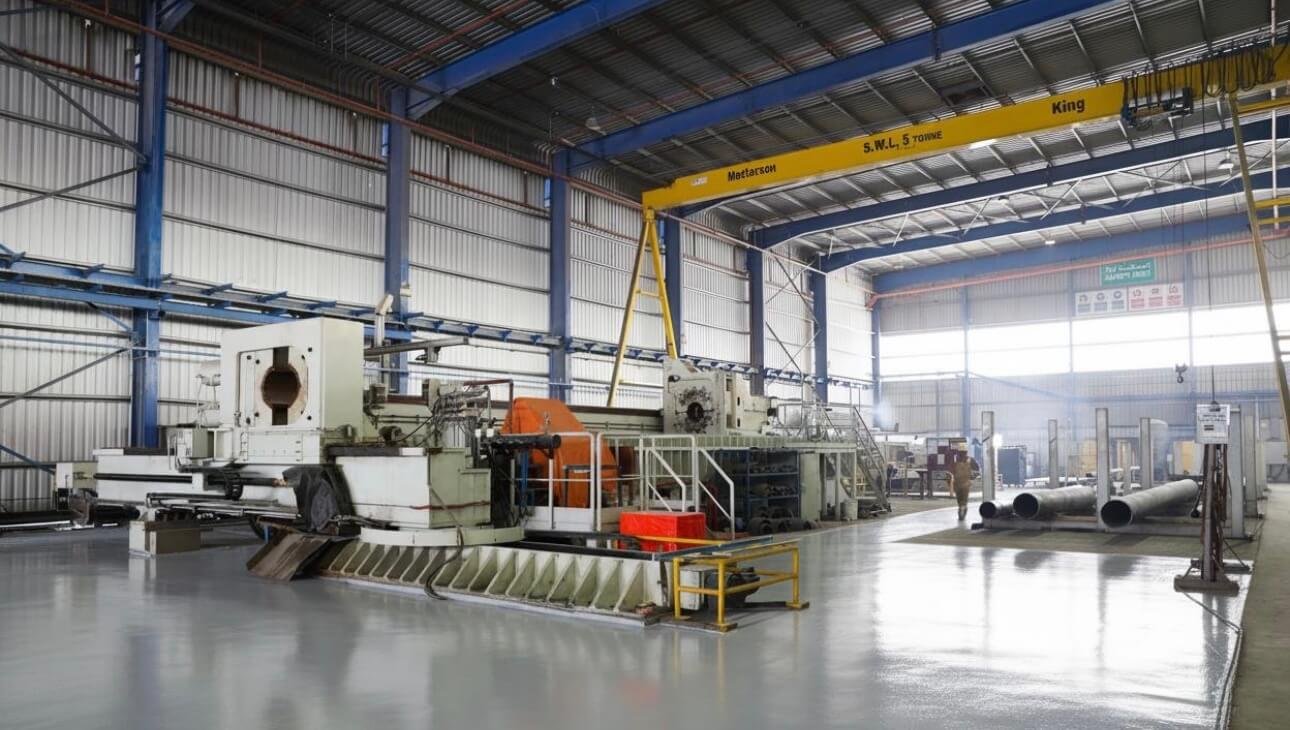
Brentex’s US$50 million steel pipe facility in Onne is positioning Nigeria to localise specialised pipeline services that are currently sourced largely from overseas.
Nigeria’s push to deepen local content in the oil and gas industry is gaining momentum with the development of a US$50 million Steel Pipe Induction Bending and Coating Facility by Brentex Petroleum Services Limited at the Federal Ocean Terminal, Onne, Rivers State.
The facility is being developed to provide an integrated range of specialised services, including steel pipe induction bending, heat treatment, testing, coating and pipe repair—capabilities that have traditionally relied heavily on overseas suppliers.
According to the Nigerian Content Development and Monitoring Board (NCDMB), more than US$26 million has already been invested in the project. When completed, the facility is expected to provide integrated processing for steel pipes ranging from 2 to 48 inches, positioning it as a major addition to Nigeria’s specialised pipeline engineering capacity.
Building capacity at home
The significance of the project extends beyond the physical facility.
Brentex expects the operation to engage approximately 200 engineers and technical personnel, creating opportunities for employment, technical training, skills transfer and long-term capacity development.
The company’s stated ambition is for the facility to ultimately be 100% handled and operated by trained Nigerians, reinforcing the broader objective of developing indigenous expertise in specialised oil and gas engineering.
Reducing dependence on overseas services
Brentex estimates that approximately 95% of steel pipes used in the industry are currently imported. The new facility is therefore intended to give operators access to specialised bending, coating and repair services within Nigeria.
That shift could have practical implications for project execution: shorter lead times, reduced logistics and procurement costs, fewer delays associated with overseas facilities, and greater retention of value within the Nigerian economy.
Brentex is also involved in the Ajaokuta–Kaduna–Kano (AKK) Natural Gas Pipeline project, giving the company’s emerging capabilities potential relevance to major pipeline infrastructure projects in Nigeria.
What the investment really represents
The strategic importance of the facility goes beyond the equipment being installed.
It represents an attempt to move Nigeria further along the value chain—from purchasing specialised engineering services from abroad to developing the capability to deliver those services locally.
For operators, that could mean greater access to specialised pipeline services within the country. For Nigerian engineers, it creates opportunities to develop experience in highly technical processes. And for the wider economy, it creates the potential to retain more procurement and engineering value within Nigeria.
NCDMB has described the project as a significant demonstration of Nigeria’s growing capacity in oil and gas logistics, engineering and manufacturing, and has pledged to support industry patronage of the facility once operational.
The capacity indicators
US$50M — Total project investment
US$26M+ — Invested to date
2–48 inches — Planned pipe-processing range
~200 — Engineers and technical personnel expected
100% — Long-term Nigerian operation target
Q4 2027 — Target for full operation
LCWatch Insight
Local content is not simply about where equipment is purchased. It is about where value is created.
When specialised engineering processes that were previously sourced overseas can be performed in-country, Nigeria retains more procurement value, develops technical competence, shortens the supply chain and creates a platform for further industrial capability.
The real measure of the Brentex investment will come after commissioning: how much work moves in-country, how many engineers acquire specialised capability, and how extensively operators use the facility.